An Herbalists Guide to Avoiding (or surrendering to) a Nervous Breakdown
/I herby give you permission to surrender to an informed nervous breakdown. In reality, surrendering to a nervous breakdown may have a healing affect.
Read MoreI herby give you permission to surrender to an informed nervous breakdown. In reality, surrendering to a nervous breakdown may have a healing affect.
Read MoreA cough is a cough, right? All I need is a bottle of NyQuil, Netflix and a hot water bottle. Well, not exactly. In fact that NyQuil or any other cough suppressant may slow the recovery process by not allowing the cough to do its’ job.
Coughs can be anything from annoyance to an indication of illness. Coughs can even be a trigger response of muscle spasms in the throat or bronchi due to mucus, an irritant, allergy or in some cases a symptom of spasm brought on by GERD or acid reflex.
Essentially, a cough indicates that there is something in the respiratory tract that your body wants to be rid of. First, determine if the cough is due to irritation from microbes, dust, pollutants or due to secretions from mucus build up that comes with a cold or flu. Once that determination is made- clear the area of irritants or treat the ailment as well as possible and build the immune system to reduce a reoccurrence.
By the way-What is mucous?
Mucous lines the parts of the body that interact with the outside world. It covers and protects to keep the areas moist, trapping and eliminating materials such as microbes, virus particals and bacteria. Mucous contains enzymes and antibodies to increase resistance.
The color of mucous indicates severity of infection:
Clear: lack of infection or beginning/ending of infection
Yellow to green: May indicate infection. White blood cells called neutrophils contain a greenish enzyme which alters color of mucous.
Morning mucous may be colored yellow to green- if it resolves; this is not a indication of infection.
How to differentiate a cough
A dry cough is typically associated with a past infection as in a cough that lingers following a respiratory infection. This type of cough is often classified as dry and non-productive.
Warm, resinous herbs Grindelia, Cayenne and Lobelia all fit the profile of dry, spastic cough. Lobelia can be irritating to some but it’s powerful bronchial antispasmodic actions can sometimes be a life saver. Lobelia combines well with our local Petasites, Coltsfoot to prevent irritation.
Dry, non spasmodic coughs will benefit from moistening herbs like Marshmallow, Elder flower and Licorice.
A dry cough can also be the before mentioned spasm from a throat irritant or even an unconscious tic. Throat irritation may be linked to acid reflux and digestion issue- Add marshmallow, okra or dietary changes to reduce the GERD and most cough responses will resolve.
Wet, productive cough is when mucus is brought up in the coughing process. With a productive cough you may wonder- do I suppress the cough or allow the body to secrete the mucus?
An active, productive cough translates to your body doing a great job of clearing the virus or illness that is creating the phlegm that is building up in your lungs. Remember- that mucous/plegm is your body’s immune system sending worker cells in to clear out the pathogens.
As a herbalist- I rarely see a productive cough as something that needs to be “treated.” That said- if it is keeping you from sleeping or functioning- There are a few options in the herbal medicine cabinet.
Osha Root will move phlegm and help resolve a persistent cough without completely stopping the elimination of phlegm. Osha is highly aromatic and effective- a little goes a long way.
Osha has a reputation of taking the wet “out of the swamp” and can be taken as a syrup, tincture or decoction.
Other herbs to reduce secretions are Yarrow, Common Thyme, Lomatium. A common drying herb for coughs is Garden Sage which is a delight to grow in the garden.
Wet, unproductive cough is when you feel the pressure and tickle of the cough but when you cough and cough - nothing comes up. This can be frustrating and exhausting!
This classification of herbs for a wet, unproductive cough is an expectorant.
Expectorants help expel mucous from the bronchial passages and will typically have some aromatic aspect to their energetics.
A PNW native that is an effective expectorant is the Devil’s Club- another highly aromatic plant. A favourite in my household is Elecampane which is the one to reach for when the phlegm is discoloured and yellow.
A home remedy that has staying power is the antimicrobial and expectorating powers of the onion.
Here’s a simple remedy to try:
Onion Cough Syrup Home Remedy
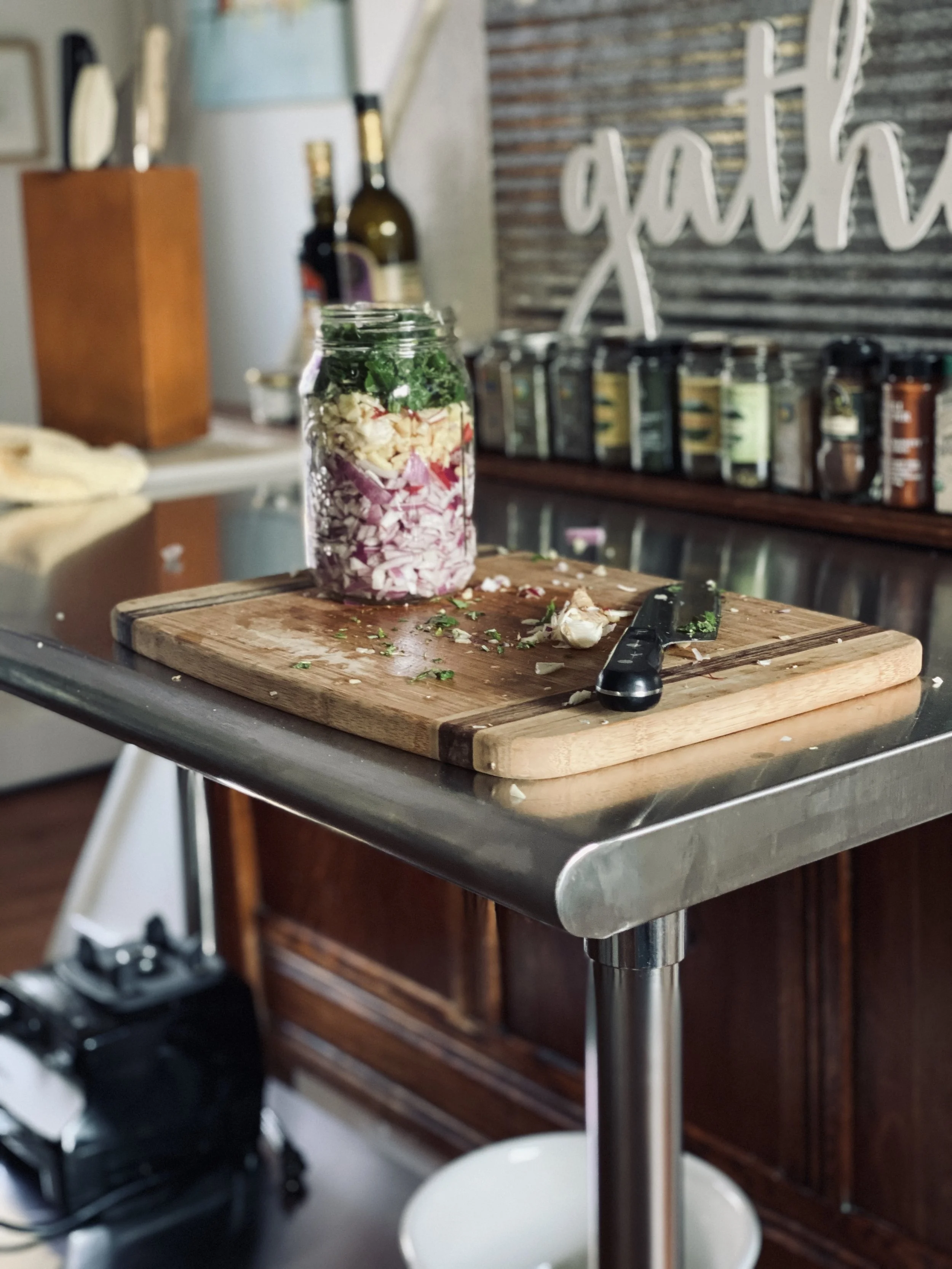
2 large white or yellow onions
Honey
1 lemon
Lung tincture of choice (Elecampane is a favorite) Other options- Lomatium, Thyme, Sage
Chop the onions and place in a double boiler. Pour honey to cover, add fresh squeezed juice of lemon and cook slowly on low heat.
The water from the onion will mix with the honey through the processing. Cook honey and onion for a few hours to maximise the decoction, strain and measure the “juice” of the onion and add equal part herbal tincture of choice.
This recipe is stable for up top a few months.
For a smaller batch, use one small onion and use up within a week.
FYI- Tinctures contain alcohol so adjust if needed. For non- alcohol or for a child- make the small onion batch with No Tincture added and use within a few days- Take 1 teaspoon as often as every hour.
Pro tip! Respiratory health can be supported first or in adjunct of herbs by using steams. Steam via a pan on the wood stove, direct with a nebulizer or using a basin of hot water with your head over the basin, creating a towel tent to allow the steam to stay contained while you breathe in the vapors. Ahhhh.
All of our evergreens are healers of the lungs- place the fir, cedar, hemlock tips directly in a steam or pot of water to allow the vapors to open and heal the respiratory tract.
Some essential oils that are helpful are thyme, tulsi, oregano, clove, cinnamon and eucalyptus.
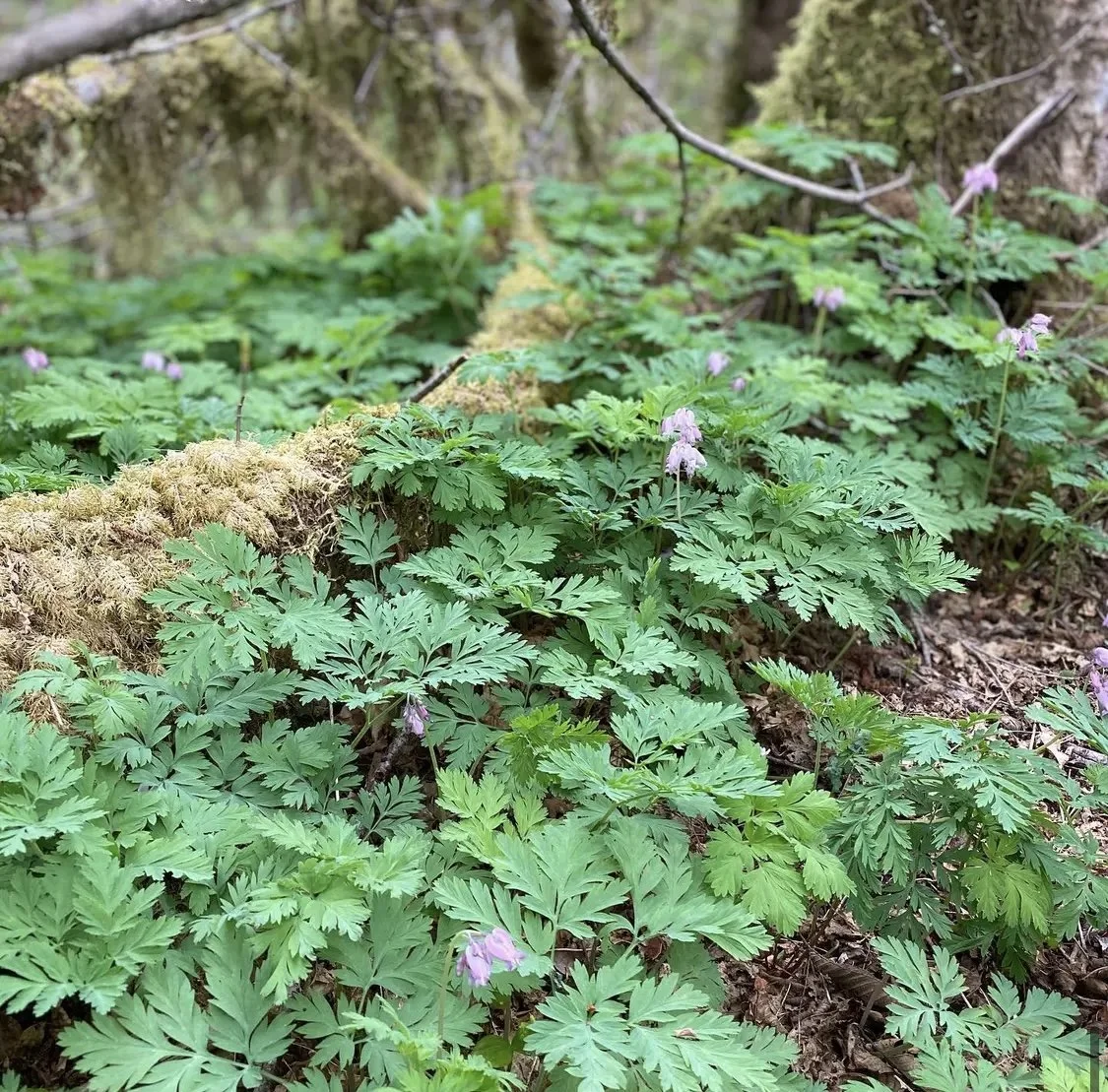
Dicentra formosa, Bleeding Heart, PNW wildflower
Read MoreBone is the hardest of human tissue. Bone is active. Bone is living. Bone is reborn every ten years with new bone in a process called remodeling.
Read MoreI studied the Hawaiian healing art of Lomi Lomi in 2016 and it transformed my healing practice. I was a reluctant massage therapist. I considered myself an herbalist and my connection to my massage “profession” was out of alignment of my calling.
Have you ever been called over and over again to something? For a few months in 2015- I would receive dreams and nudges to seek out training in Hawaii. My guides? Guardian angels? Ancestors?
Maybe.
This is an excerpt from the journalling I did following my mastership training on the Island of Maui.
My Kumu (teacher) Chucky is a wild driver. He takes the curves of the Road to Hana on the island of Maui to a’nother level. I rode shotgun on a trip to Hana one morning and learned about plant medicine and the healing art of Lomi Lomi along the way.
Chucky is a quiet Hawaiian man who seems to never miss a thing. Every day in our resident mastership training, he sits to the right of my Kumu Jeana. For some reason, we’re just happy he’s there. He rarely speaks but when he does , you listen. It’s a long way to Hana and Chucky and I only spoke about herbs and lomi for a matter of minutes- this is what I learned.
A lomi Ohana (family) approach to illness/disharmony/dysfunction is taken in steps.
#1 is pule, prayer
#2 is lifestyle changes. Or as they say in Hawaii, living ‘Pono’- the basics of eating well, exercise and managing stress. Also living in right relationship with self and others.
#3 is Lomi. Hands on touch to open the core and extremities, improving movement, organ function- the works.
#4 is , wait for it… Herbs/plant medicine.
At the time; as an herbalist- I am shocked to hear this.
Herbs are #4?! I have to wait until I have prayed about my body?? I have to change and address my lifestyle/habits? I have to get in alignment with my muscles and bones to optimise organ function through healing touch?
And then, only then, do I get to use powerful herbs to “fix” everything.
What is this nonsense?
In typical Chucky fashion, he just watched the road as he took the next curve to Hana. With each passing car and Shaka wave, I sat next to Chucky and let it set in awhile.
‘Yes, Erin. Herbs are last because after prayer, lifestyle change, healing touch and living in right alignment- you are in harmony.
You are healed.’
My respect for lomi increased that day. I began to understand the significance of this work. I saw the herbs as an extension of my hands as lomi practitioner, not the quick fix of matching herb to issue.
Being #4 doesn’t reduce the significance of the herbs; quite the opposite.
They are the elders of the tribe, hanging out, just in case. I sometimes feel them when I am providing Lomi Lomi in sessions. They remind me that they are there.
Like Chucky, they just quietly stand by if I need them.
And when they speak, I listen.
Willow, Salix sp. Salix derived from the Celtic “Sal”, near and “ix” for water. Water, in itself is such a healing element- it is easy to see how willow captures its grace, strength and flexibility just by watching it move with the flow of the surrounding water. Tree medicine in willow is similar to the alder, cottonwood and birch- all contain salicin and all can be found near water with the exception of the Birch which has a more widespread ecology.
Read MoreFresh herb salts are a simple way to integrate wild foods into your kitchen and into the palate of those you love. What better way to get your family to eat wild foods than to having it on your kitchen table as a salt alternative or sprinkled on popcorn to really get their attention?
Read MoreHave you had the pleasure of sitting with our star girl, Chickweed? You can look close at the star-like flowers and feel the chill, cool vibes she emanates. Literally place your hands above chickweed on a hot day and you can feel the coolness. Want to feel cool in heated situations? Ally with Chickweed!
Read MoreI am convinced that the wave of interest in local flora is not a trend but a kind of knowing. People are slowing shifting from a comfort level with our health care system and realizing a basic understanding of how herbs and local plants can support and heal our bodies may just come in handy.
Read MoreIf I had to pick one- I'd say I am a gardener over a wildcrafter. I like to have the plants close to me all the time, like a trusted friend or sibling. But when I am in the forest, I feel like I am a wildcrafter or, as a friend coined the term, wildtender. Lucky for me, I don't have to choose. I get to have both.
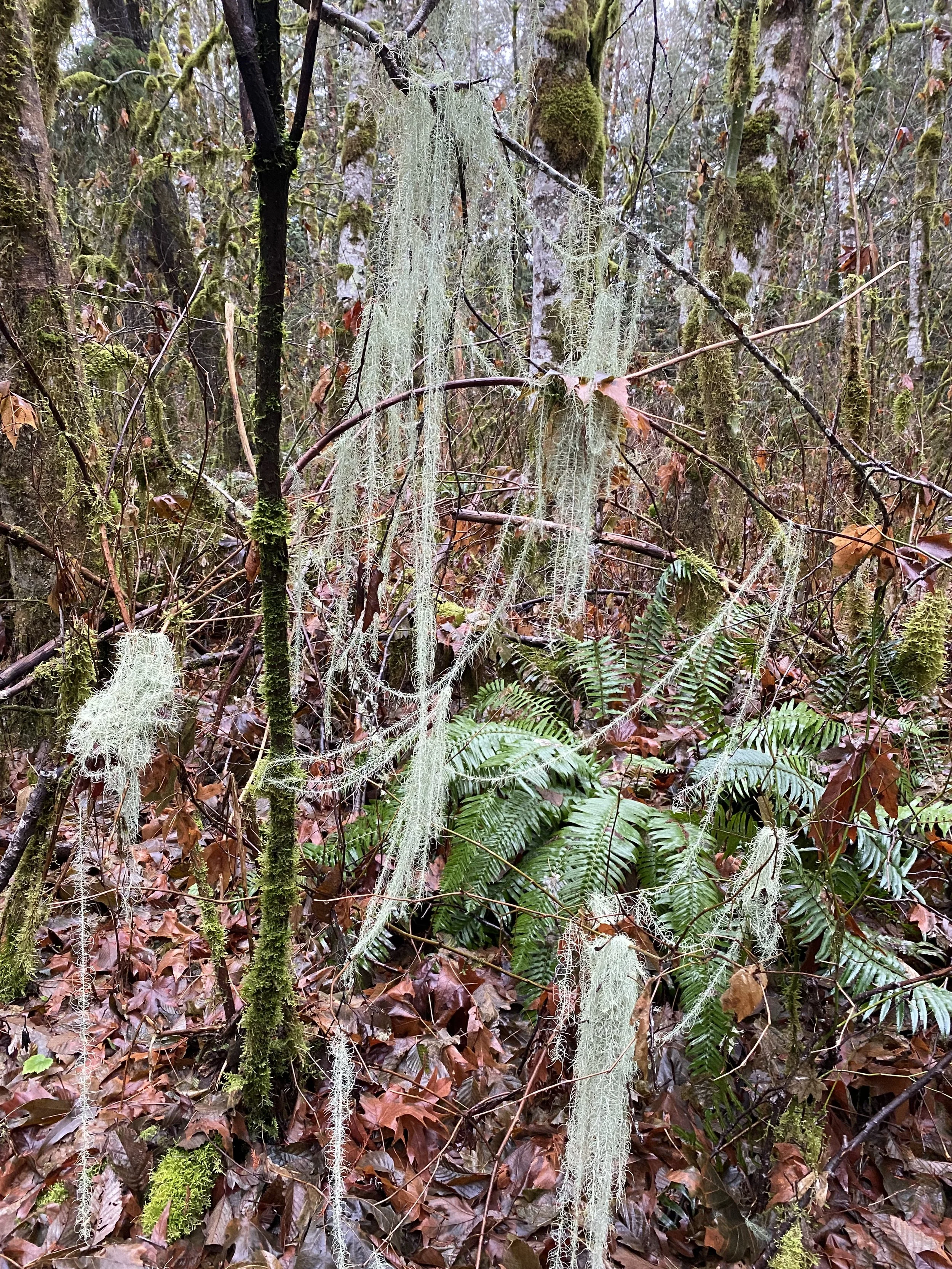
Read MoreThe Old Man’s Beard is always present but takes pause and allows the surrounding plants to shine in the spring and fall, quietly hanging out (literally) in the back drop of the seasonal foliage. Old Man’s Beard is not actually a plant, but a lichen. A lichen is part algae and part fungus. It dehydrates with the summer season and becomes a lighter green and a bit scratchier self which is its subtle way of saying “I think I will hang here quietly and not get your attention. It is not the time of year(for harvest.)”
Read MoreI like the idea of Tiny Farms. It's really what most folks can afford. I was listening to an interview with my friend Skeeter and he posed the question “If there's Tiny Houses, why not Tiny Farms?
Why not indeed?
Why wait for a dream property of 50 acres when you can produce all you need for yourself and family on a city lot?
Read MoreOkay, so you get a cold and the sinuses are so congested you run to the store for a nasal decongestant that kind of works but ends up just making you groggy. You think, there must be something I can do to open these sinuses...
Or, you have a cough that is so persistent you couldn’t possibly make it through that meeting at work.
What if I told you that some simple herbal remedies would help reduce the frequency, severity and length of your illness? Would you like some help knowing what you can do to reduce the symptoms of cough, ear infections, sinus issues and understanding the physiology of fevers?
Read MoreTo the untrained eye there is not a lot going on herbally right in the Fall. Leaves are falling and aside from berries and seed, herbaceous plants are waning into the autumn light.
But a party is going on beneath the soil!
Read MoreThe wisdom of Goldenrod is to seek out the limitless joys of summer and store them deep in your roots. Goldenrod is a great ally for us with the Autumn Equinox. I marvel at the root system of my third-year garden plants. Their roots dive hungry in to the soil in summer and fall, going deeper and deeper, gathering energy from the sun-soaked soil throughout the Cascadia season of light. In the winter, Goldenrod roots lie just below the surface, vulnerable yet holding strong from the nourishment of the summer past.
Read MoreEmail: erin@trilliummedicine.net. Telephone: 360.391.2706
Clinic Address By Appointment: 320 East Fairhaven Avenue, Burlington, WA
Powered by Squarespace.